

Imagine standing on the rolling hills of England, gazing out at what seems like just another beautiful day in the countryside, yet beneath the surface lies a treasure trove of history that rewrites our understanding of prehistoric Britain. In January 2026, a groundbreaking discovery near Stonehenge revealed a set of massive pits, leading researchers to deem it *Britain’s largest prehistoric structure*. So, what do these giant pits tell us about our ancestors? Let’s dive into this fascinating narrative.
Highlights
- 🔍 *Giant pits* forming a ring around Durrington Walls discovered.
- 📅 Dating confirms they were built around 2480 BC.
- 💡 Offers insight into Neolithic social structures and engineering.
- ✨ Changes our perception of Stonehenge’s role in ancient Britain.
Unearthing the Past: The Discovery
As winter chills settled over the landscape, the team from the University of Bradford and the University of St Andrews unleashed an arsenal of scientific techniques to study the area near *Durrington Walls*. This location isn’t just a random patch of ground; it’s a historic site that once pulsated with life. As I read the research, I could practically hear the echo of ancient footsteps in the soil.
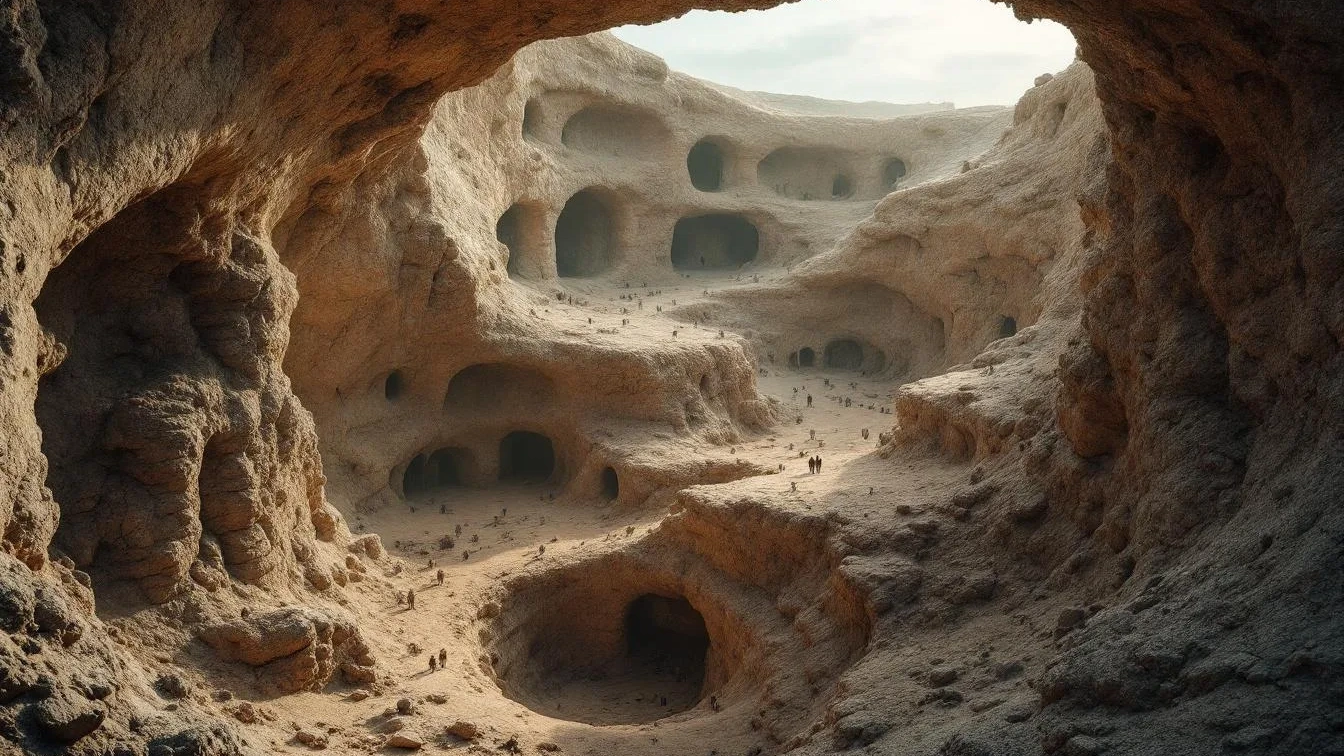
These enormous, man-made pits, measuring up to 33 feet wide and 16 feet deep, form a near-perfect circle. Picture this—a guardian ring around a place of ritual, celebrating life and death, community and reverence. The pits are not random geological formations but rather the result of organized labor, painstakingly created during the late Neolithic period.
How They Did It: Advanced Techniques in Archaeology
The confirmation came from multiple data sources, including *optically stimulated luminescence* (OSL), which has been compared to a time capsule for soil. This method allows researchers to determine the last time grains of sand were exposed to sunlight—a technique that sounds like something out of a sci-fi movie! As the lab results rolled in, the team found a concise time frame, indicating that these pits were dug during a singular, fervent period of activity.
- 🔬 *Geoelectrical surveys* used to assess the electrical properties of soil.
- 🧲 *Magnetometry* employed to identify magnetic anomalies indicating human modification.
- 🌍 Sedimentary DNA testing revealing flora and fauna from the era.
Decoding the Purpose: What Were These Pits For?
But wait—what were these *giant pits* intended for? Initially, I thought of storage for crops or feasting areas. But researchers found no traces of seeds or agricultural evidence. Instead, they propose a bold theory: these pits may have served as a *cosmic boundary*, delineating sacred from mundane spaces. Imagine stepping across a threshold where the physical world blends with the spiritual one!
Tim Kinnaird, the research lead, suggests that these structures were a dramatic portrayal of their belief systems. The people constructing the circle might have been trying to connect with the underworld, creating a space of worship surrounded by a protective barrier. This perspective adds a new layer to our understanding of what it means to be human in the Neolithic age.
Broader Implications: Redefining Stonehenge
What strikes me most about this newfound discovery is how it reshapes our perception of *Stonehenge*. Once considered the pinnacle of Neolithic architecture, it now appears to be merely the highlight of a much larger, multi-faceted “*Super-Henge*” complex. This expansive network reveals a society intricately linked, thriving, and innovatively engineering their world.
To visualize this expansion, imagine an ancient city buzzing with trades, meals, celebrations, and rituals. The pits at Durrington are evidence of a strategic layout, echoing the need for organization and social structure, something I often overlook when thinking about prehistoric life. These communities were far from primitive; they were skilled engineers and social architects.
The Modern Archaeological Perspective
In the 2020s, the narrative of archaeology continues to evolve. No longer solely focused on treasure hunting, today’s archaeologists seek to uncover how ancient peoples lived and interacted. Each pit speaks volumes about labor allocation and resource management, a complex web that interlaces the past with our understanding of community. Every layer of sediment contains a story, and each grain of sand leads us deeper into the human experience.
This ongoing excavation not only reveals physical structures but also shines a light on the cultural practices of the Neolithic era. As researchers peel back layers of time, they uncover not just what was left behind but what was profoundly felt and believed, adding emotional depth to each archaeological find.
Ready to Discover More?
Join me in enlightening future generations about our shared history. Who knows what more lies beneath our feet? Let’s keep digging!